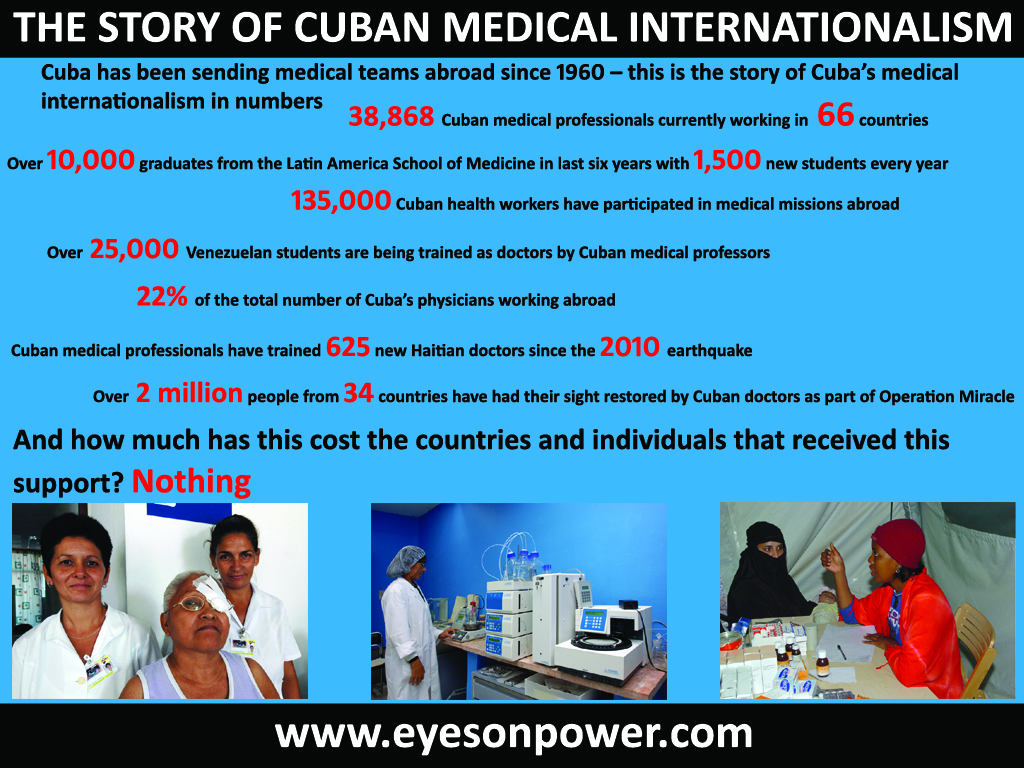
 |
| Source: New Internationalist |

Showing posts with label healthcare. Show all posts
Showing posts with label healthcare. Show all posts
Thursday, 6 December 2012

Tuesday, 20 March 2012
The Tories' transparent agenda

As Budget Day looms, George Osborne has laid out plans to give taxpayers a detailed breakdown of how their taxes are spent in the name of transparency and accountability. According to Exchequer Secretary David Gauke, "We want to make tax more transparent and we want people to be more engaged with their own tax affairs".
Let's not kid ourselves that the initiative has anything to do with transparency or openness – it is instead about re-enforcing a neo-liberal assault on public spending.
The cognitive linguist George Lakoff – in his fascinating book Don’t Think of An Elephant – explores how conservatives consistently win political debates through their control and manipulation of language. Lakoff’s basic idea is “framing”, the idea that appropriate language can create a framework evoking a set of concepts supporting your point of view. Just as our natural reaction when someone says “don’t think of an elephant” is to think of an elephant, our natural reaction when someone says “look how much you’re spending in tax towards health” is to think we’re spending too much.
The mainstream media has neatly mimicked and echoed this discourse. BBC Breakfast News, the Telegraph and the Daily Mail – with varying degrees of vitriol – have focused on specific fields – particularly welfare, health and education – where the government are making the most brutal cuts. The fact that the political and media establishment have focused on these areas – rather than, say, Defence spending – demonstrates the real target of this policy.
The "frame" for Osborne's idea is not about increasing accountability, engagement or transparency. The implication is that social spending – on health, education or welfare – is inherently wasteful. If people can physically see where their taxes go, they are more likely to support the Conservatives’ austerity measures.
Labour cannot oppose the move – based as it is on 'progressive' values such as openness and accountability – but it can change the field of debate in three ways:
Firstly, in terms of value for money. According to the Treasury, someone earning £25,000pa contributes £743.26 towards education. As someone who received free education until the age of 18, it seems like a bargain – especially when you consider any children I have are entitled to free education too. Under £1,000 for full medical cover on the NHS also looks like a snip – especially when you compare it to the cost of private health insurance.
Secondly, in terms of real transparency. Osborne’s proposal will show us which areas our taxes are going to, but it won’t show us who they are going to. Where is the breakdown of how public taxes are being used to subsidise big business? Whether it’s bailing banks out during the financial crisis; subsiding multinationals such as Tesco through Workfare; or bankrolling private companies like A4e in the Work Programme – the Left must shape the debate to show the real abuse of taxpayers’ money.
And finally, how about publishing a register of how taxpayers benefit from public spending – from museums, galleries and libraries to parks, roads and hospitals? As the Con Dem attack on public institutions continues unabated, it might prove a valuable historical document.
Let's not kid ourselves that the initiative has anything to do with transparency or openness – it is instead about re-enforcing a neo-liberal assault on public spending.
The cognitive linguist George Lakoff – in his fascinating book Don’t Think of An Elephant – explores how conservatives consistently win political debates through their control and manipulation of language. Lakoff’s basic idea is “framing”, the idea that appropriate language can create a framework evoking a set of concepts supporting your point of view. Just as our natural reaction when someone says “don’t think of an elephant” is to think of an elephant, our natural reaction when someone says “look how much you’re spending in tax towards health” is to think we’re spending too much.
The mainstream media has neatly mimicked and echoed this discourse. BBC Breakfast News, the Telegraph and the Daily Mail – with varying degrees of vitriol – have focused on specific fields – particularly welfare, health and education – where the government are making the most brutal cuts. The fact that the political and media establishment have focused on these areas – rather than, say, Defence spending – demonstrates the real target of this policy.
The "frame" for Osborne's idea is not about increasing accountability, engagement or transparency. The implication is that social spending – on health, education or welfare – is inherently wasteful. If people can physically see where their taxes go, they are more likely to support the Conservatives’ austerity measures.
Labour cannot oppose the move – based as it is on 'progressive' values such as openness and accountability – but it can change the field of debate in three ways:
Firstly, in terms of value for money. According to the Treasury, someone earning £25,000pa contributes £743.26 towards education. As someone who received free education until the age of 18, it seems like a bargain – especially when you consider any children I have are entitled to free education too. Under £1,000 for full medical cover on the NHS also looks like a snip – especially when you compare it to the cost of private health insurance.
Secondly, in terms of real transparency. Osborne’s proposal will show us which areas our taxes are going to, but it won’t show us who they are going to. Where is the breakdown of how public taxes are being used to subsidise big business? Whether it’s bailing banks out during the financial crisis; subsiding multinationals such as Tesco through Workfare; or bankrolling private companies like A4e in the Work Programme – the Left must shape the debate to show the real abuse of taxpayers’ money.
And finally, how about publishing a register of how taxpayers benefit from public spending – from museums, galleries and libraries to parks, roads and hospitals? As the Con Dem attack on public institutions continues unabated, it might prove a valuable historical document.
Tuesday, 28 February 2012
David Cameron - Master Magician
 |
| "For my next trick, I will make your pension disappear" |
An expert magician is a master of deception and misdirection. As the virtuoso conjurer distracts your gaze – and blinds you with dazzling patter – his hands work feverishly out of sight before revealing his confounding trick. The audience is left baffled and dumbfounded in a daze of shock and awe. The trick is left unexplained and irreversible. The magician is sworn never to reveal his secret.
David Cameron – with Andrew Lansley as his glamorous assistant – is a maestro of political misdirection and ideological sleight-of-hand, but the left cannot let itself fall victim to the coalition’s relentless trickery.
The proposed restructuring of the NHS has understandably caused widespread outrage. Over 100,000 people have signed an ePetition calling on the government to abandon the Health and Social Care Bill, it has met with opposition from health professionals, activists and trade unionists, and derision has come from unlikely ideologues such as Stan Collymore and Rio Ferdinand.
The mobilisation of opposition to the Health Bill is inspirational, but it is important not to see the struggle as independent or isolated from government policy elsewhere. Cameron’s retention of Andrew Lansley – whilst numerous commentators have suggested his position is untenable – represents a willingness to court controversy. Lansley could have been purged as a scapegoat in an attempt to detoxify the Health Bill, but instead he has been retained as a villainous stooge to attract vitriol and detract attention from other unsavoury policy.
The Health Bill is the apex of a creeping barrage of stealthy privatisation which seeks to auction off profitable elements of the public sector in an effort to kick-start economic recovery. The tactic is short-termist, irrevocable and will create gapping inequity.
The Conservatives cannot be allowed to use the NHS hubbub to mask the systematic dismantling of the welfare state: from the constriction of the benefit system to the rise of free schools and city academies. The education sector in the UK is worth an estimated £2bn and – since the coalition came to power – the number of academies operating outside local government control has increased by nearly 800% to 1,529. With focus trained on the NHS reforms, this has gone almost completely unnoticed. Furthermore – and unlike the Health Bill – these developments have received no opposition from the Tories’ yellow-bellied Lib Dem bed fellows.
Whether it’s concerned parents worrying about schools being taken over by big business; students agonising over the withdrawal of EMA; or cancer patients stressing over work-ready assessments – activists and campaigners will usually be interested in single issues. It therefore falls on the Labour Party to cut-through the impenetrable mystification, unite the struggles and be at the forefront of each of these conflicts. These are not independent policy decisions and the Labour Party must ensure that the synapses of struggle are connected so people can understand the ideological assault on public services.
Ed Miliband has been at his strongest when acting as a respectable insurgent fighting entrenched power – particularly against News International and bankers’ bonuses. Now is the time to intensify and unite the struggle. Miliband has the not just the opportunity, but the moral obligation, to define and shape the debate. It’s time for him to break the magician’s code and let us in on the trick.
David Cameron – with Andrew Lansley as his glamorous assistant – is a maestro of political misdirection and ideological sleight-of-hand, but the left cannot let itself fall victim to the coalition’s relentless trickery.
The proposed restructuring of the NHS has understandably caused widespread outrage. Over 100,000 people have signed an ePetition calling on the government to abandon the Health and Social Care Bill, it has met with opposition from health professionals, activists and trade unionists, and derision has come from unlikely ideologues such as Stan Collymore and Rio Ferdinand.
The mobilisation of opposition to the Health Bill is inspirational, but it is important not to see the struggle as independent or isolated from government policy elsewhere. Cameron’s retention of Andrew Lansley – whilst numerous commentators have suggested his position is untenable – represents a willingness to court controversy. Lansley could have been purged as a scapegoat in an attempt to detoxify the Health Bill, but instead he has been retained as a villainous stooge to attract vitriol and detract attention from other unsavoury policy.
The Health Bill is the apex of a creeping barrage of stealthy privatisation which seeks to auction off profitable elements of the public sector in an effort to kick-start economic recovery. The tactic is short-termist, irrevocable and will create gapping inequity.
The Conservatives cannot be allowed to use the NHS hubbub to mask the systematic dismantling of the welfare state: from the constriction of the benefit system to the rise of free schools and city academies. The education sector in the UK is worth an estimated £2bn and – since the coalition came to power – the number of academies operating outside local government control has increased by nearly 800% to 1,529. With focus trained on the NHS reforms, this has gone almost completely unnoticed. Furthermore – and unlike the Health Bill – these developments have received no opposition from the Tories’ yellow-bellied Lib Dem bed fellows.
Whether it’s concerned parents worrying about schools being taken over by big business; students agonising over the withdrawal of EMA; or cancer patients stressing over work-ready assessments – activists and campaigners will usually be interested in single issues. It therefore falls on the Labour Party to cut-through the impenetrable mystification, unite the struggles and be at the forefront of each of these conflicts. These are not independent policy decisions and the Labour Party must ensure that the synapses of struggle are connected so people can understand the ideological assault on public services.
Ed Miliband has been at his strongest when acting as a respectable insurgent fighting entrenched power – particularly against News International and bankers’ bonuses. Now is the time to intensify and unite the struggle. Miliband has the not just the opportunity, but the moral obligation, to define and shape the debate. It’s time for him to break the magician’s code and let us in on the trick.
This article was originally written for Labour List
Thursday, 16 June 2011
The Doctors' Revolution
 Michael Tynan, Emeritus Professor of Paediatric Cardiology, first visited Cuba in 1987 to provide expert advice to a new children's heart unit at the William Soler Hospital in Havana. Over 20 years later and Cuba is the only country in the world to offer foetal heart scanning as a standard part of pre-natal care, infant mortality is one of the lowest in the world and Michael has just finished making a documentary film – The Doctors' Revolution – charting the struggle and success of Cuba's health system.
Cuba first began to focus on pre-natal heart defects in the 1980s when infant mortality had been brought down to Western levels. Maternal obstetric care was sorted and children were no longer dying from curable diseases such as malnutrition and pneumonia. Tynan differentiates Cuba from other developing countries:
In a Third World context, infant deaths resulting from heart disease are almost irrelevant because you’re more concerned with clean water and maternal care. As far as I can interpret, Cuba realised that congenital heart defects were an increasingly important proportion of the now pretty low infant mortality.The Doctors’ Revolution tells the story of a young boy, Felix, with a congenital narrowing of the aorta. Although it required major and potentially dangerous surgery, a relatively simple piece of equipment could have been used to open up the valve leading to Felix’s heart.
Unfortunately, due to the blockade, and aside from a complicated – and in Tynan’s view overly bureaucratic – procurement system, the hospital was unable to order the equipment internationally because it was manufactured in the United States.
Although there is scope for limited humanitarian medical exchange between the US and Cuba, Tynan explains that Cuba’s internationalism and record of offering healthcare to developing countries is seen by the US as an attempt to profiteer:
Before Felix there seemed to be a tightening of restrictions. The United States government decided that equipment being exported to Cuba was being used by children from other countries and this contravened their rules. They assumed – because this is how healthcare in the West goes – that this was being done for financial gain so they intensified the embargo and wanted details of every child that was using the equipment. What right does the US government have to demand the medical history of a patient in another country? This turn of the screw meant there were long hold-ups and difficulties in getting specific pieces of equipment.The situation with the US government is further complicated because, if there is an irregularity, then the person liable for prosecution is the person responsible for where it originated in the States. As Tynan notes, this has resulted in medical equipment coming to Cuba from the US in very roundabout ways: “Things from America could go via France or Madagascar and, by the time they got to Cuba, they were more expensive because everybody had had their piece of the action along the way”.
Considering the intensification of the blockade, Cuba’s achievements in the field of healthcare – particularly in the areas of infant mortality, life expectancy and internationalism – are nothing short of miraculous. As far as Tynan is concerned, it is the organisation of the Cuban health system which lies at the heart of this success:
The most impressive thing about the Cuban health service is the organisation of preventative medicine through the family practitioner. If you don’t take your insulin for your diabetes then the GP wants to know why and it’s not left to you to go along and ask for a prescription. That’s the most impressive thing – even more than the high-tech medicine.After the revolution, public healthcare was based on the Soviet model of the polyclinic and it wasn’t until the late 1970s that they moved to a family-centred model based on preventative and proactive medicine. There are still a high proportion of un-booked new born deliveries in Britain – but that’s very rare in Cuba because GPs live within the community they serve. As Tynan says:
It’s very much a patient-family-community healthcare system. The number of doctors they have – and the number of nurses who are just as important – is amazing. They have as many doctors in Cuba for 11 million people as we have in Britain for 60 million.Cuba’s commitment to public health has been the heartbeat of their socialist programme – both domestically and internationally – since their struggle against Batista in the 1950s. Following the exodus of significant numbers of doctors after Castro’s victory, Cuba needed to train large numbers of doctors and nurses in a programme Tynan equates in size and significance to the literacy campaigns.
It was central to their ideas when they started and I think it was intensified by their experience during the revolution in the Sierra Maestra. The enemy had cannons and tanks but they had a doctor – and the people had never seen a doctor before. The basic socialist ideas were reinforced by what they saw of the peasant life in rural areas. And of course Che Guevara must have had some input because he’d been through Latin America and seen various levels of healthcare.The diversity of the medical profession in Cuba testifies to the increased opportunities ushered in by the revolution. On Tynan’s first visit to Cuba he met a young doctor who attributed his success to the victory of the 26th July Movement:
He was the son of a garage mechanic and, although it’s not beyond the realm of possibility that the son of a garage mechanic could become a doctor in England now, it was well beyond the realm of possibility in Cuba before the revolution. The medical school in Havana was dominated by the white middle-class of Spanish decent.Although called The Doctors’ Revolution – because Tynan himself and many of the people he interviews are doctors – Tynan recognises and praises the work of all health workers in Cuba:
Just like any healthcare system the doctors are just the head on the beer. They have the most glamorous role but plenty of people would die after surgery if they didn’t have physiotherapy. Then there are all the radiology technicians whose expertise is central and the people working in pathology departments, dieticians, dentists and nurses.Cuba’s commitment to public health and its associated success – at home and around the world in developing countries and disaster zones – is not only remarkable considering the economic and political context in which it exists, but it stands as a shining beacon to the Western world of what is possible if you prioritise public health and international solidarity.
 This article was originally written for CubaSi magazine
Subscribe to:
Posts (Atom)